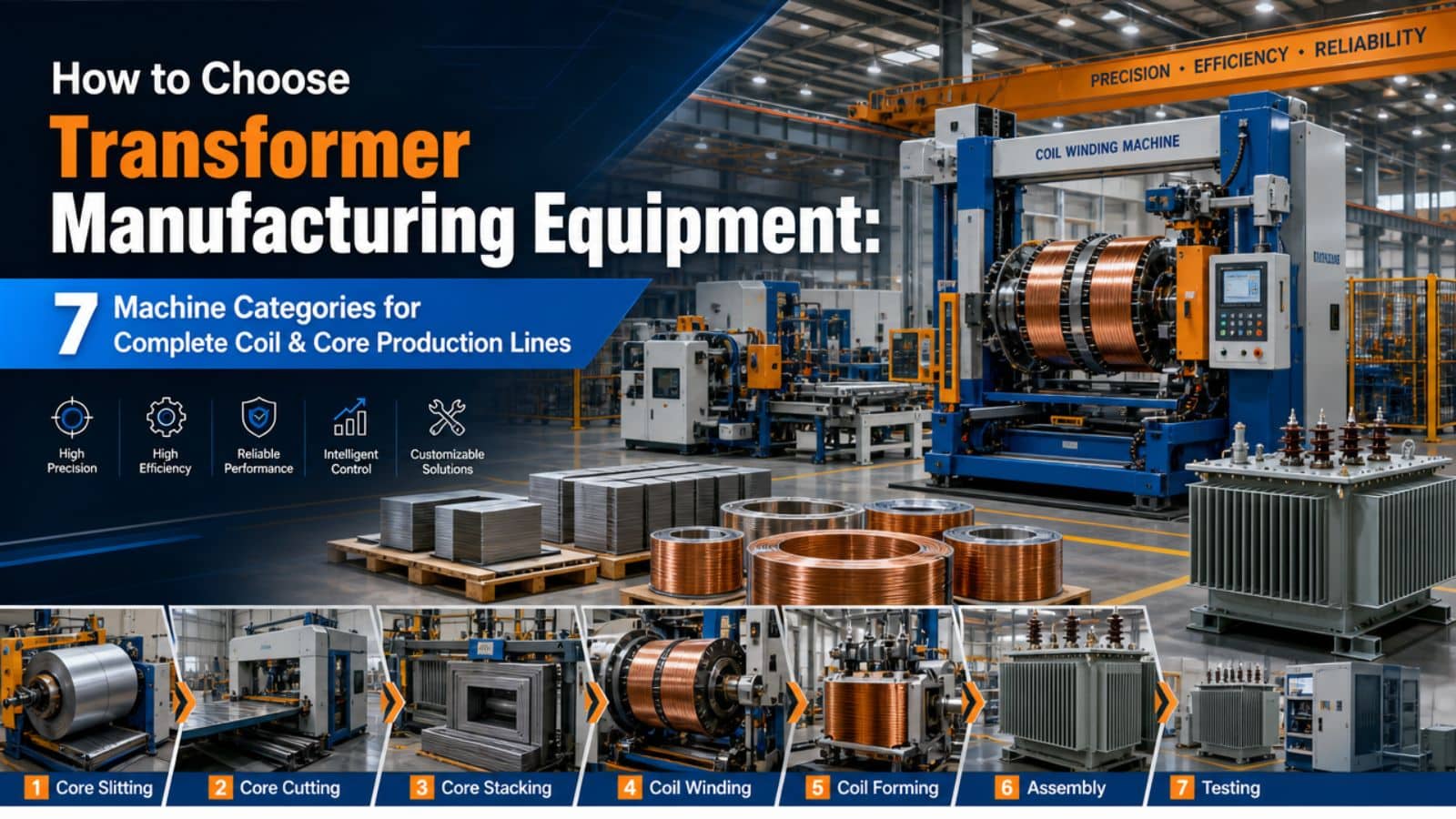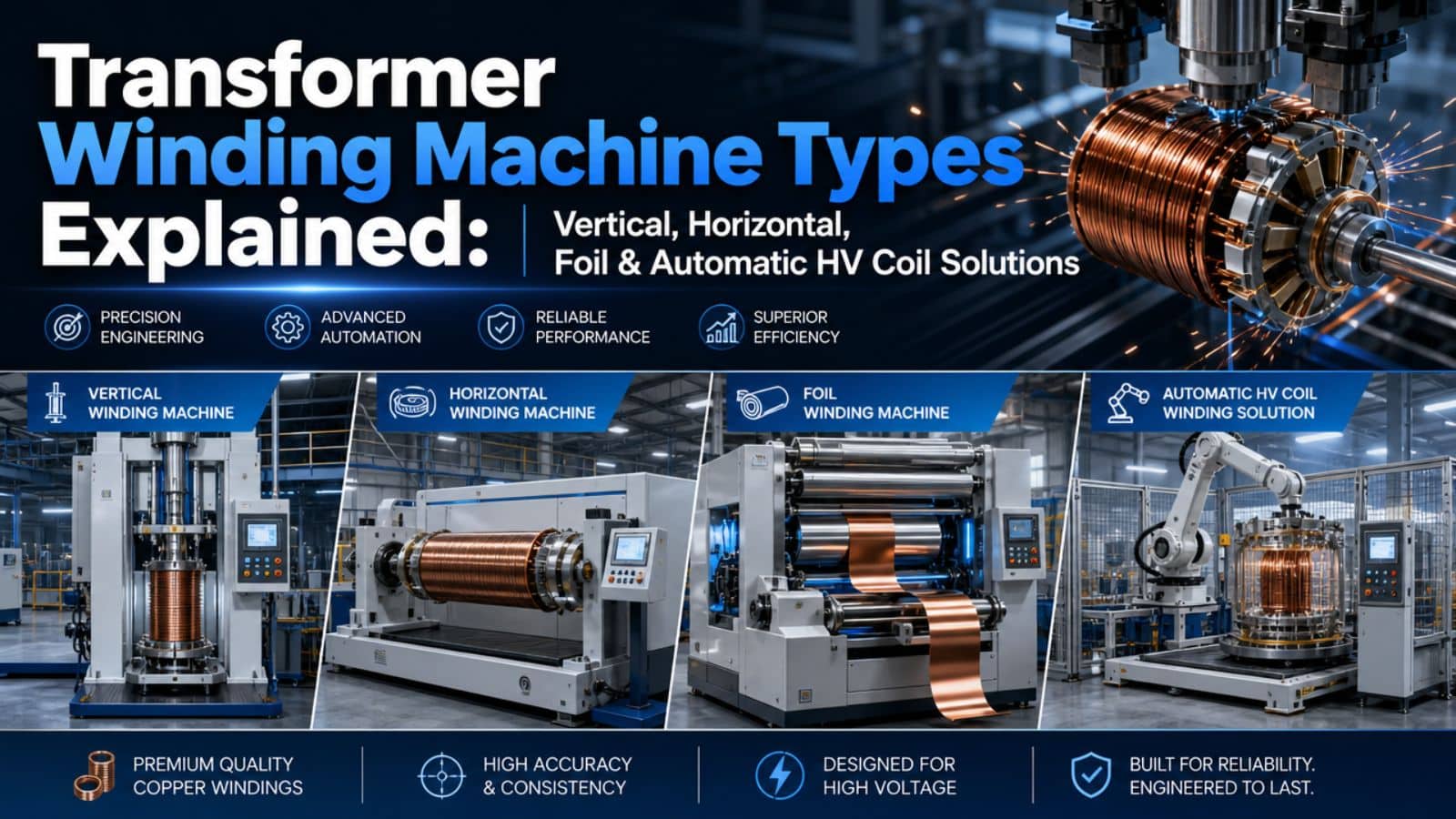
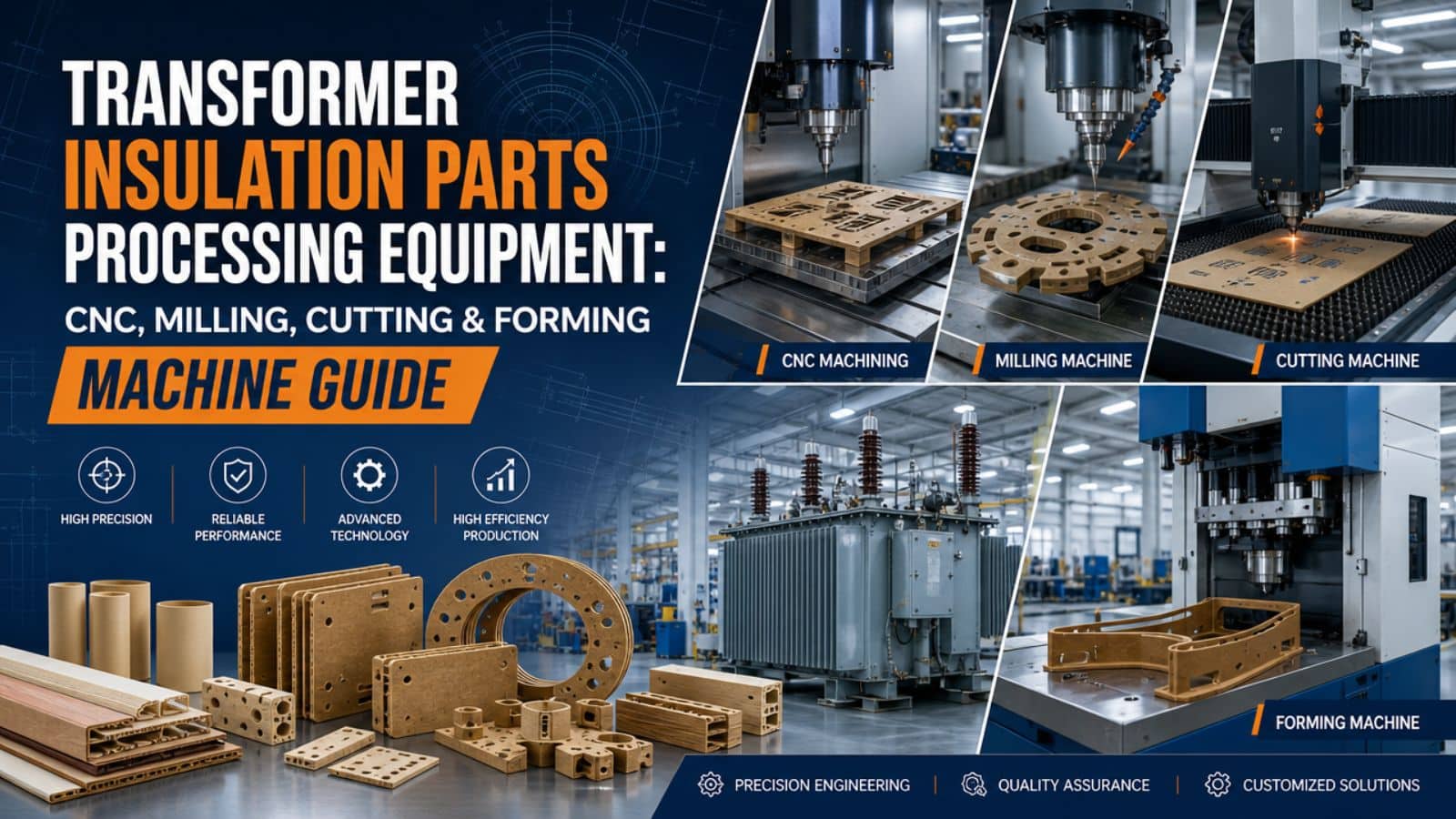
Transformer insulation is not just a material—it is a precision-engineered system of spacers, cylinders, rings, and pressboard components that must maintain dielectric strength under thermal cycling, mechanical stress, and long-term oil immersion. Producing these parts in-house, with the right transformer insulation parts processing equipment, gives manufacturers control over lead times, material grades, and geometric tolerances that directly affect transformer reliability.
This guide covers the core machine categories used to process transformer insulation materials: machining centers, milling systems, cutting lines, and forming equipment.
The Insulation Parts Portfolio in a Typical Transformer
Before selecting machines, understand the parts you need to produce:
- Cylinders and barriers: Rolled pressboard or laminated wood tubes that separate windings
- Spacers and blocks: Dove-tail, T-shaped, or step-profile pressboard pieces that maintain oil ducts
- End insulation: Bonded pressboard rings and pads that support winding ends
- Beveled pressboard: Angled edges for oil flow and electric field grading
- Machined pads and blocks: CNC-milled components for clamping and support structures
Each part has distinct material, tolerance, and surface-finish requirements.
CNC Step Pad Block Machining Center
Best for: Complex 3D profiles in laminated wood, pressboard, or epoxy-resin boards.
The CNC Step Pad Block Machining Center is the workhorse of insulation parts fabrication. It mills step-profile blocks, clamping pads, and support structures with repeatability that manual cutting cannot match.
What to look for:
- Work envelope size (must accommodate your largest pressboard sheet or laminated wood block)
- Spindle power and speed range (denser materials like laminated hardwood require higher torque)
- Automatic tool changer for multi-operation sequences (roughing, finishing, drilling)
- Vacuum table or mechanical clamping suited for non-metallic, often porous workpieces
These machines eliminate the need to outsource machined insulation components, cutting lead times from weeks to hours.
Milling Machines for Insulation Components
Several dedicated milling configurations address specific insulation geometries:
Dove-tail Spacer Milling Machine
- Produces the interlocking dove-tail profile used in oil-duct spacers
- Critical for maintaining consistent duct width, which controls oil flow and heat dissipation
- Often includes automatic feeding and stacking to support batch production
Insulation Parts Processing Center
- A versatile multi-axis machining platform that can switch between spacer milling, block profiling, and light drilling
- Suitable for factories with diverse insulation part requirements and moderate batch sizes
Insulation Parts Sawing and Milling Combined Machine
- Integrates rough sawing with finish milling in one setup
- Reduces work-in-process handling and improves squareness between sawn and milled faces
- Ideal for thick pressboard or laminated wood where separate sawing and milling operations introduce alignment errors
Cutting Equipment: Precision Sawing, Shearing, and Slitting
Insulation materials—especially pressboard and crepe paper—are abrasive and fibrous. Standard metal-cutting tools dull quickly and leave frayed edges. Dedicated insulation cutting machines are designed for clean, burr-free separation.
NC Horizontal Sawing Machine
- Cuts thick pressboard or laminated wood blocks to length
- NC control ensures repeatability for batch jobs
- Carbide-tipped or specially coated blades resist fiber abrasion
NC Shearing Machine
- Used for thinner pressboard sheets, paper laminates, or soft composites
- Guillotine-style or rotary shear action with programmable back-gauge
- Produces straight, square edges needed for layered stack-ups
Pressboard Slitting Machine
- Slits wide pressboard rolls or sheets into narrow strips for layer insulation, lead exits, or filler pieces
- Critical parameter: edge cleanliness and width consistency, which affect layer registration during winding
Circular Shearing Machine
- Cuts circular or curved profiles in sheet pressboard
- Used for end-rings, arc-shaped barriers, and cylindrical segment production
- Rotary action produces smoother curves than band saw or die-cutting methods for thick materials
Forming and Shaping Equipment
Some insulation parts are not machined from solid blocks but formed from sheets or tapes.
Cylinder Rolling Machine
- Rolls flat pressboard into cylindrical liners or barriers
- Heated rollers may be included to soften densified pressboard and reduce spring-back
- Diameter accuracy and seam alignment are critical for winding clearance
Cylinder Cohesion Machine
- Bonds multi-layer rolled cylinders into rigid tubes
- Uses heat and pressure (or adhesive) to laminate layers
- Produces the thick-walled cylinders used between HV and LV windings
Batten Shaping Machine
- Forms rectangular or profiled battens (spacer strips) from pressboard
- Often feeds material from rolls and produces finished battens with chamfered or rounded edges
Pressboard Beveling Machine
- Applies angled edges to pressboard sheets or blocks
- Bevels improve electric field distribution and facilitate oil flow at edges
- Angle consistency matters; CNC-controlled bevelers maintain programmed angles across batches
Bonding and Assembly Equipment
End Insulation Bonding Machine
- Bonds multiple layers of pressboard into end-support rings or pads
- Uses heat and pressure to activate pre-applied adhesive or resin
- Uniform pressure distribution prevents delamination under clamping loads
Multi-Layer Heat Press Machine
- Laminates multiple sheets of pressboard, paper, or composite into thick insulation plates
- Temperature and pressure profiles are programmable to match resin cure cycles
- Results in high-density, dimensionally stable blocks for machining or direct use
Automatic Feeding and Punching
Automatic Feeding Punching Machine
- Punches holes, slots, or profiles in pressboard or soft insulation sheets
- Automatic feeding allows continuous operation from roll or sheet stock
- Used for producing patterned spacers, vent strips, or mounting holes in barriers
Material Considerations When Selecting Equipment
表格
| Material | Machine Considerations |
|---|---|
| Pressboard (0.5–8 mm) | Sharp, coated cutting tools; vacuum clamping; dust extraction |
| Laminated wood (densified) | High-torque milling spindles; robust fixturing; slower feed rates |
| Crepe paper / Nomex | Low-tension handling; rotary or shear cutting; static control |
| Epoxy-resin boards | Temperature control during machining; dust collection for health/safety |
Building an In-House Insulation Parts Shop
A complete insulation processing line typically flows as:
- Cutting (slitting, shearing, sawing) → dimension raw material
- Forming (rolling, shaping) → create cylindrical or profiled blanks
- Machining (CNC milling, combined sawing/milling) → finish complex geometries
- Bonding / Pressing → laminate multi-layer components
- Finishing (beveling, chamfering) → prepare edges and surfaces
Integrating these steps under one roof eliminates outsourcing delays, protects proprietary designs, and lets you iterate on insulation geometry during prototype development.
Conclusion
Transformer insulation parts demand precision that general-purpose wood or metalworking equipment cannot reliably deliver. From CNC Step Pad Block Machining Centers and Dove-tail Spacer Milling Machines to Cylinder Rolling Machines and Multi-Layer Heat Presses, each machine category addresses a specific stage in insulation fabrication.
Investing in the right transformer insulation parts processing equipment pays dividends in reduced field failures, shorter manufacturing cycles, and the ability to qualify new transformer designs without waiting for outsourced prototypes.